Heading 02 · Section page
Replacement doors: types, security and standards
Explore door guides comparing composite, uPVC and timber, with advice on security, insulation, costs and regulations for English homes today.

You are comparing a replacement door and you need four answers in one place: which type fits your opening, how security is judged, what insulation to ask about and which buying standards to check. This doors section brings those questions together so you can read a quote with a clear head and know what to ask next.
The short answer is that the security side is led by Secured by Design, which describes itself as the official police security initiative owned by UK Policing, with the aim of reducing crime and helping people live more safely. The articles here show you how to use that guidance when you shop, while the page does not publish door prices, sizes, U-values or fitting details, so you collect those figures from your own supplier and compare them on paper.
01 What this doors section helps you decide
You start with the opening itself. A front door, a back door and a side door face different weather, different light and different use through the day, and your choice has to suit the way you come and go. This section keeps that practical view in front of you and asks you to note the width of the passage, the direction of opening and the way the threshold meets the floor before you look at brochures.
The section then moves from the shape of the door to the way it performs. You learn to separate three checks that sellers often mix together in one sentence. Security tells you how the door resists attack. Insulation tells you how it slows heat loss around the leaf and the frame. Buying standards tell you who tested the claim and which document supports it. When you keep those three apart, you can ask sharper questions and you avoid paying for one benefit while thinking you bought another.
02 How does good design lower the risk around your home
Secured by Design presents crime reduction as a design task rather than a single product. Buildings and their surroundings are improved through effective design and police-approved standards, with the aim of safer communities across the United Kingdom. For you as a homeowner, that means you look beyond the leaf and you consider the frame, the fixing into the wall, the sightlines from the street and the light around the entrance at night.
You can apply that idea without technical training. Stand outside and check what a passer-by can see. Stand inside and check how the door closes, latches and locks with one smooth action. If you have to lift, push or pull the handle to make the bolts engage, note it and ask for adjustment. The page does not publish fitting tolerances or maintenance schedules, so you write down what you see and you ask the supplier to confirm in writing how the door should be set and checked.
03 Which security points should you compare first
Security pages often talk about the lock alone, yet Secured by Design describes a wider approach that covers products and practices together. You are invited to look for crime prevention advice and accredited products that help you protect your home and your belongings, which shifts the question from which lock looks strong to which combination of door, frame, hardware and installation has been assessed together.
To keep the comparison fair, ask each seller the same questions and record the answers side by side. Ask who made the door and the frame, which hardware set is fitted, how the frame is fixed to the opening and what documents arrive after fitting. Guidance on locks, hinges and testing helps you frame those questions in plain terms. The source page does not publish a checklist of lock types or hinge grades, so you do not invent one here and you let each supplier name the exact set supplied with your door.
04 What Police Preferred Specification tells you
When you browse security products you will meet the phrase Police Preferred Specification. Secured by Design explains that only its members can achieve that product accreditation, and that membership and accreditation are presented as a way to validate compliance with its standards. You can read more about the official police security initiative and see how it organises advice for homes, professionals, members and the police.
For your purchase, the practical value is simple. The mark gives you a name to verify rather than a claim to take on trust. You can ask for the accreditation name, the member name and permission to use the logo on packaging and products, which Secured by Design says is intended to build trust with customers. The page does not publish a list of every accredited door or a ranking between them, so you treat the mark as a starting filter and you still compare the written specification, the guarantee terms and the fitting service.
05 Why does insulation need a second check
Doors lose heat at the edges, at the threshold and around glazing or letterboxes, and sellers describe that performance in different ways. This section asks you to separate the leaf from the installation, because a well made door can still feel cold if the frame is poorly sealed or the threshold lets air pass. You can feel for draughts with your hand, look for daylight around the seals and listen for wind noise on a breezy day.
The source page for this article does not publish U-values, energy ratings or construction build-ups, so this article gives no table of figures or comparison of materials. Rules on efficiency rules for replacement frames sit in a separate guide on this site. When a seller quotes a thermal figure, ask which part it covers, whether it covers the whole installed door set and what assumptions sit behind the number, then keep that note with your quote.
06 What buying standards can you verify before you order
A calm order starts with paper you can keep. Ask for the full written specification, the accreditation details where claimed, the guarantee wording with its limits and the aftercare contact. You should also ask who carries out the survey, who fits the door and what happens if the opening needs extra work on the day. Those names and steps matter more than a brochure photograph because they decide how your door will close in winter as well as in summer.
Secured by Design also describes a separate route for companies, noting that it is presented as the only way for companies to obtain police recognition for security-related products in the United Kingdom. That point matters to you because it explains why some makers talk about membership while others talk only about tests. The page does not publish fees, audit methods or membership dates, so you do not judge those claims here and you ask the seller to show the current certificate that matches the exact product you buy.
07 How should you use the source when you compare quotes
Use the source as a reference point, not as a catalogue. Read its crime prevention advice, note how it describes accreditation and promotion of recognised products and practices, then return to your quotes with the same headings. One column for security evidence, one for insulation evidence, one for paperwork and fitting, and one for price and timing, keeps each seller on the same page and stops a low price hiding thin evidence.
The news part of the source shows the range of its work, from a commercial shopfront specialist joining the scheme to an award for a retirement development. Those items do not tell you which door to buy, but they show that the scheme deals with homes and with commercial and specialist housing as well. The page does not publish test reports or installation manuals, so you follow the links from the source for background and you keep your decision grounded in the written offer for your own address.
Secured by Design is the official police security initiative owned by UK Policing, with the stated aim of reducing crime and helping people live more safely. Its site offers crime prevention advice, information on accredited products, guidance for built environment professionals, membership information and educational resources about design and crime.
You can open the home protection area, note how accreditation and the Police Preferred Specification are described, then write your three questions for the next seller and keep the answers with the quote.
08 Entries filed under Doors
7 entries are filed under this heading, in ledger order. Each one names its public source and keeps to what that source publishes.
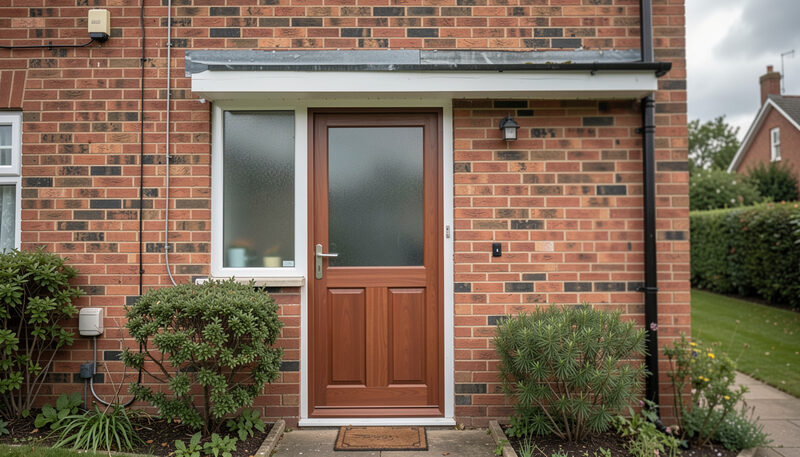
Entry 22 · /doors.php
Replacement doors: composite, uPVC and timber compared
Compare composite, uPVC and timber replacement doors on security, insulation, upkeep and lifespan to choose a durable entrance suited to English homes.
Entry 23
Reading a door or window contract before you sign
Read a replacement door or window contract clause by clause before signing: scope, payment, variations, cancellation rights and completion terms.
Entry 24
A back door for a household with dogs
Choose a back door that lives well with dogs: glazing at paw height, thresholds, flaps, scratch wear and the daily in and out routine at home.

Entry 25
Timber species for doors and windows: what the wood decides
Compare timber species used in replacement doors and windows, from durability and movement to finish, and learn what the wood choice decides.
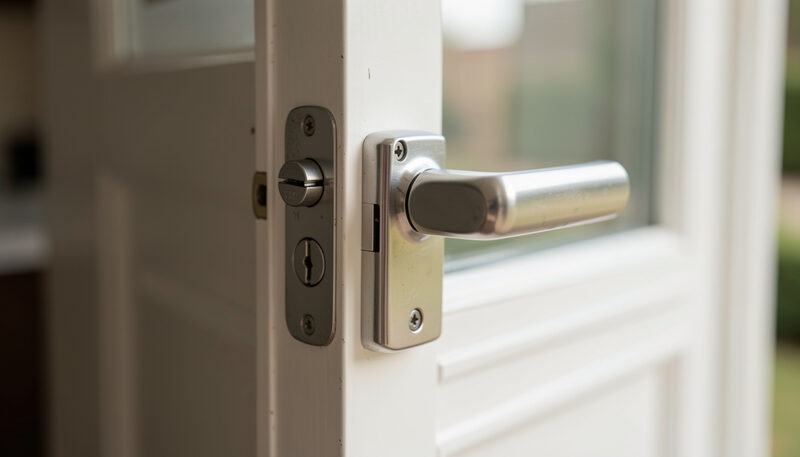
Entry 26
Secure replacement doors and hardware
Learn what makes a replacement door secure, from multi-point locks and hinges to test standards and installation checks that deter break-ins.
Entry 27
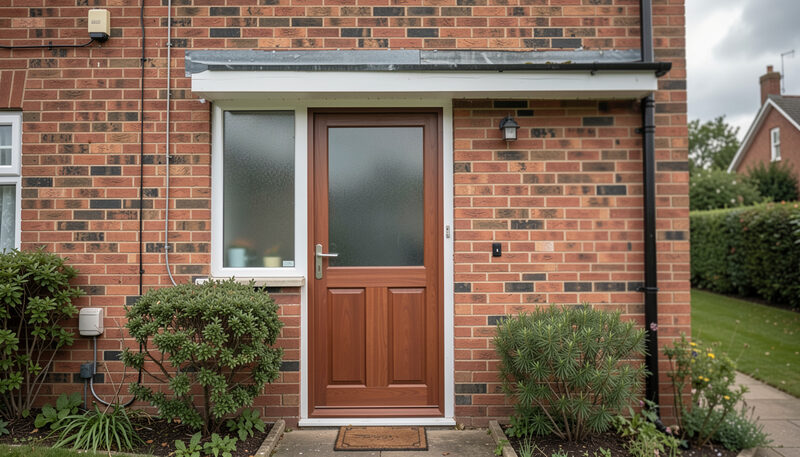
Hanging a wreath on a front door without damage
How to hang a fresh wreath on a front door without damaging the paint, how much garland a porch rail needs, and whether natural beats artificial.
Entry 28
Step-free thresholds at doors and patio doors
How to achieve level access at an existing door in England: thresholds, Part M, Part K, drainage, and what to record before work starts.


